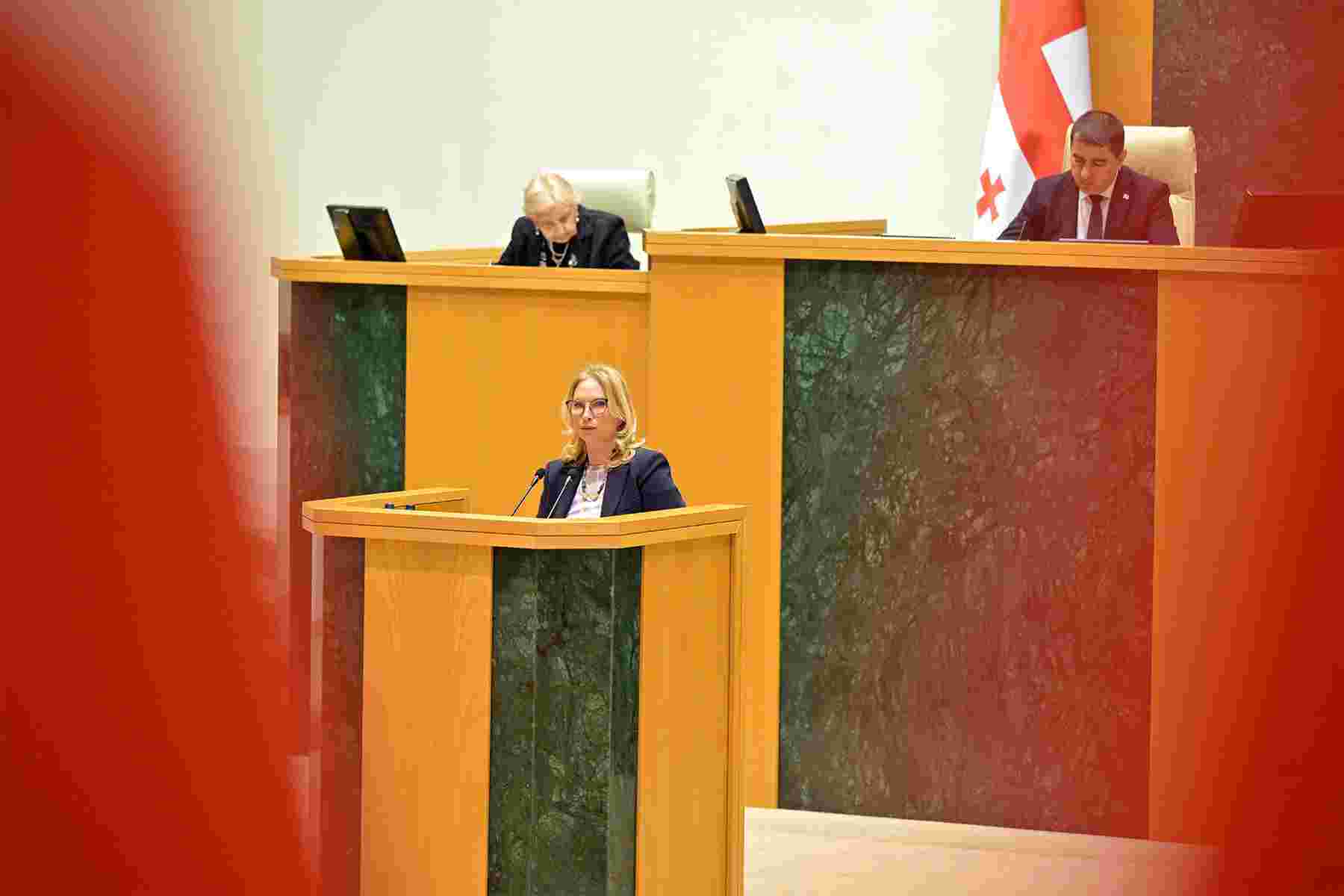
Parliament of Georgia Approves the National Bank of Georgia’s Main Directions of Monetary and Foreign Exchange Policy for 2027–2029
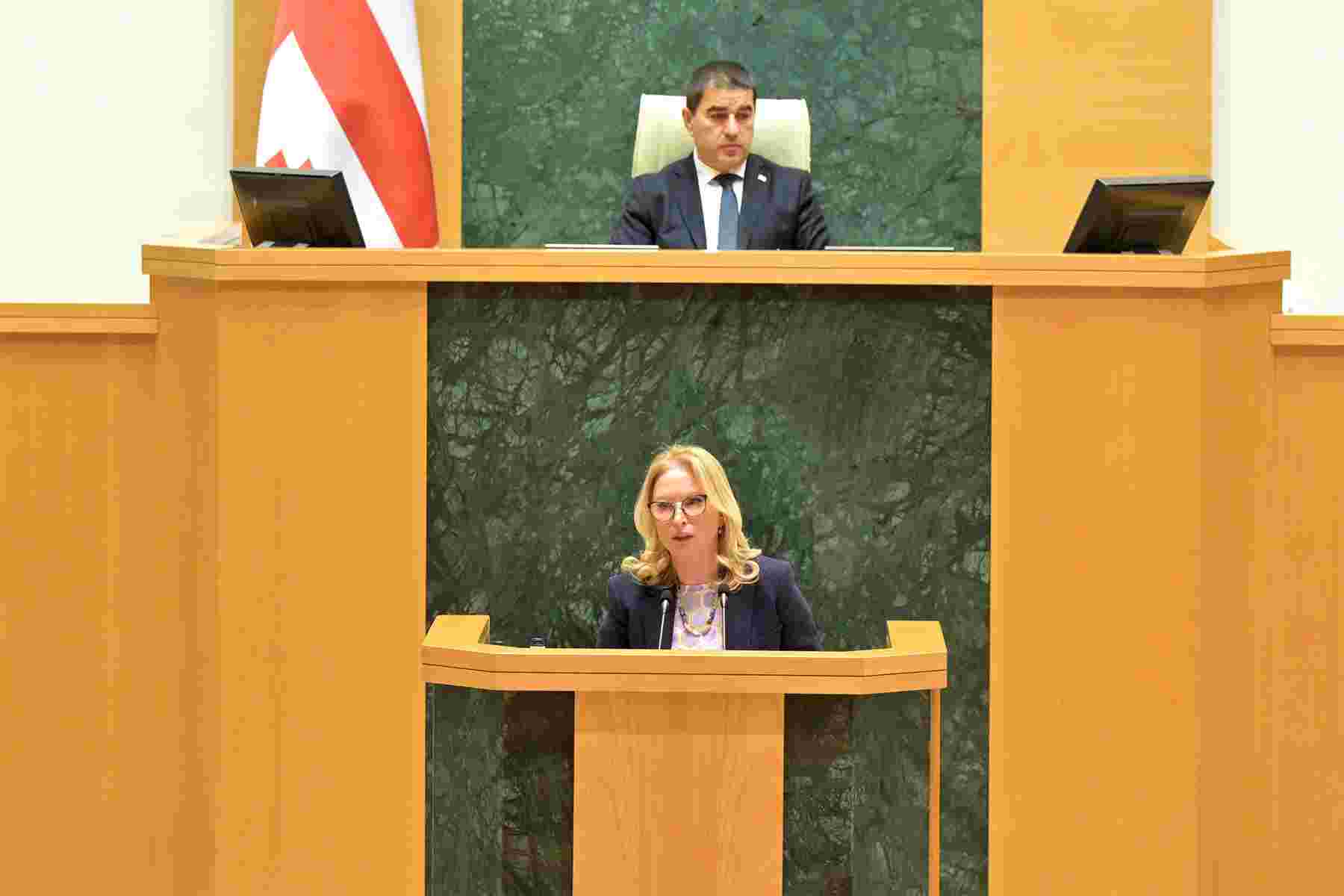
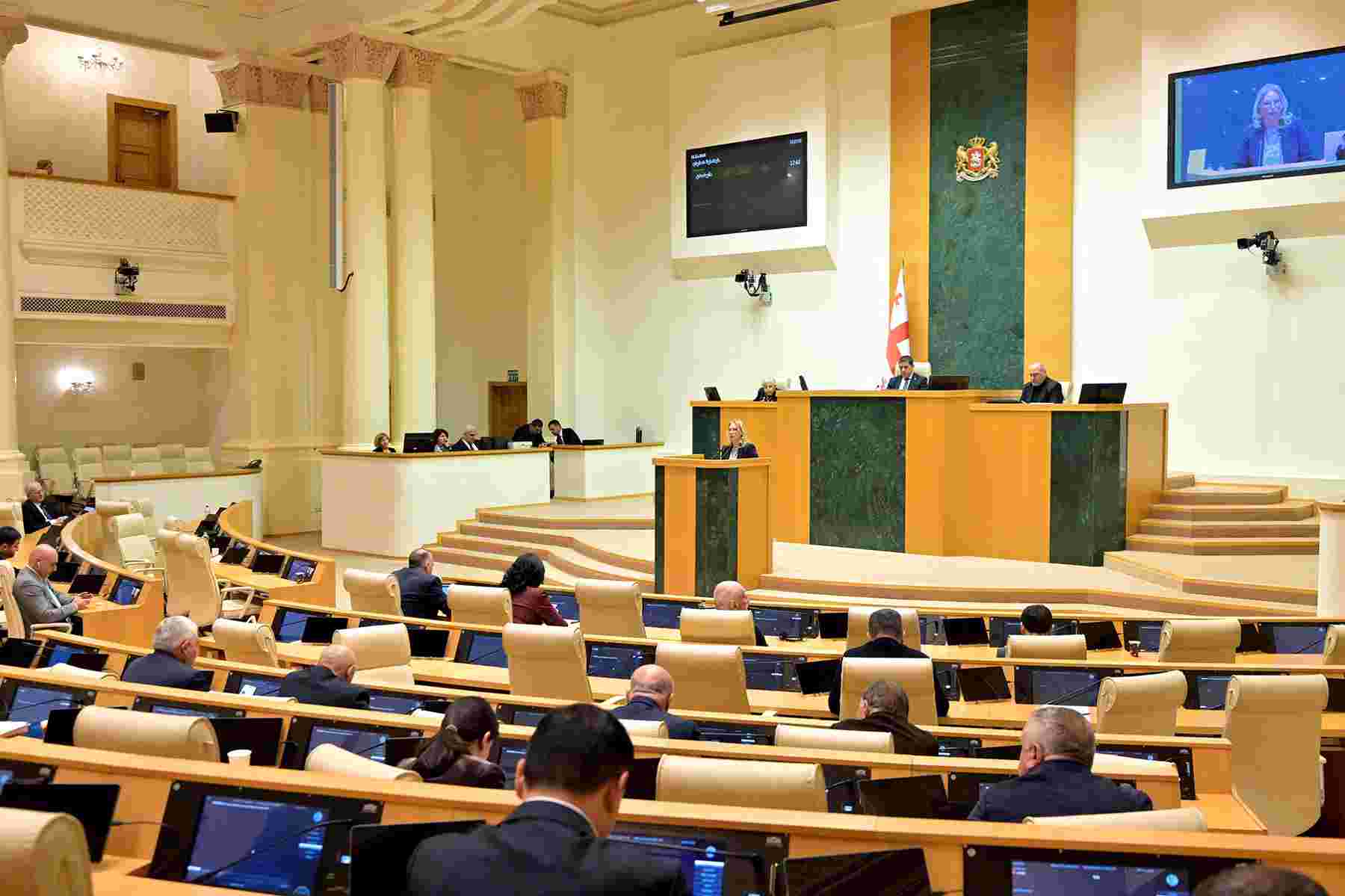
The Parliament of Georgia voted, with 76 votes in favor and none against, to approve the draft resolution on the "Main Directions of Monetary and Foreign Exchange Policy for 2027–2029." The document defines the inflation target, outlines the main monetary policy instruments to be used to achieve it, and provides an overview of the current macroeconomic environment and potential risks. It was presented to Parliament by Natia Turnava, Governor of the National Bank of Georgia (NBG).
Addressing the plenary session of the Parliament of Georgia, Natia Turnava spoke about current inflation dynamics, their underlying drivers, and medium-term forecasts. According to her assessment, the rise in inflation this year has been driven primarily by external factors, particularly increases in energy and other commodity prices on international markets resulting from the ongoing conflict in the Middle East.
"At the same time, it is important to note that the relatively persistent components of inflation, which are crucial for assessing long-term inflation expectations, remain low compared to headline inflation. As of October, core inflation stood at 3.9%, while services inflation was 4.0%," stated Natia Turnava.
She explained that the inflation outlook will largely depend on global developments, particularly international energy prices. If the ongoing conflict in the Middle East subsides in the coming months and the resulting inflationary pressures gradually ease, inflation is expected to decline next year and move closer to the 3% target from the second half of the year.
Natia Turnava emphasized that, in view of inflationary risks, the NBG maintains a cautious, data-driven approach to setting the monetary policy rate.
"Precisely with these risks in mind, we preemptively raised the monetary policy rate to 8.25% in May 2026 and have kept it unchanged since then. If we see inflation expectations and second-round effects strengthening,we are ready to tighten policy further. Conversely, as inflation moves back toward the target level, we will have the opportunity to gradually reduce the rate," noted Natia Turnava.
In her speech, the NBG Governor also addressed Georgia’s economic growth. She noted that, despite global challenges, economic activity in the country remains strong. According to preliminary data, economic growth averaged 7.4% in the first nine months of 2026.
"This composition of growth contributes to expanding the economy’s productive capacity and helps offset inflationary pressures stemming from strong aggregate demand. According to the NBG’s updated central forecast, economic growth will reach 7.2% in 2026, while in 2027 the growth rate is expected to gradually converge toward its long-term trend, reaching around 5.5%," said Natia Turnava.
In her assessment, structural changes in the economy are also reflected positively in the country’s external position. Specifically, the current account deficit stood at 2.9% of GDP in 2025 and narrowed to 2.5% in the first half of 2026. The improvement in the external balance is supported by positive trends in both trade in services and trade in goods.
Natia Turnava also highlighted exchange rate stability and rising larization. She noted that, supported by an improved external balance and favorable economic fundamentals, the lari exchange rate remains stable.
"As of September 2026, 57% of total banking sector deposits were held in the national currency, an increase of 8.3 percentage points compared to December 2024. As of the same period, 58.5% of the total loan portfolio was denominated in lari. The NBG continues to actively implement measures to promote larization, which help strengthen the monetary policy transmission mechanism and reduce the financial system’s vulnerability to foreign exchange risks," noted Natia Turnava.
During her address to Parliament, the NBG Governor also discussed the policy of accumulating and effectively managing international foreign exchange reserves. She noted that the country’s improved external position and favorable fundamentals provide a solid foundation for further growth in international reserves.
"In 2025, the NBG’s net foreign exchange purchases totaled USD 2.4 billion, while in the first nine months of 2026, net purchases had already exceeded the full-year figure for 2025, reaching USD 3.37 billion. As a result,international reserves reached an all-time high of USD 8.25 billion as of October 2026, while the International Monetary Fund’s Assessing Reserve Adequacy (ARA) metric stood at 130%," stated Natia Turnava.
According to her, alongside increasing reserve levels, their effective management and diversification are also important. To this end, the NBG continues to increase the share of monetary gold in its international reserves and diversify its holdings across currencies.
Specifically, in 2026, the NBG purchased an additional USD 500 million worth of monetary gold. As of October,the value of monetary gold reached USD 1,365.4 million, accounting for 16.6% of total international reserves.In addition, the British pound was added to the reserve assets, while holdings of Chinese yuan and euro-denominated assets were increased.
In conclusion, Natia Turnava noted that the presented monetary and foreign exchange policy is aimed at ensuring price stability over the medium term, thereby enhancing the resilience of Georgia’s economy to potential shocks and supporting stable, long-term economic growth.
11 November, 2026
Photogallery
7