Parliament of Georgia Approves the Main Directions of the National Bank of Georgia's Monetary and Foreign Exchange Policy for 2025-2027
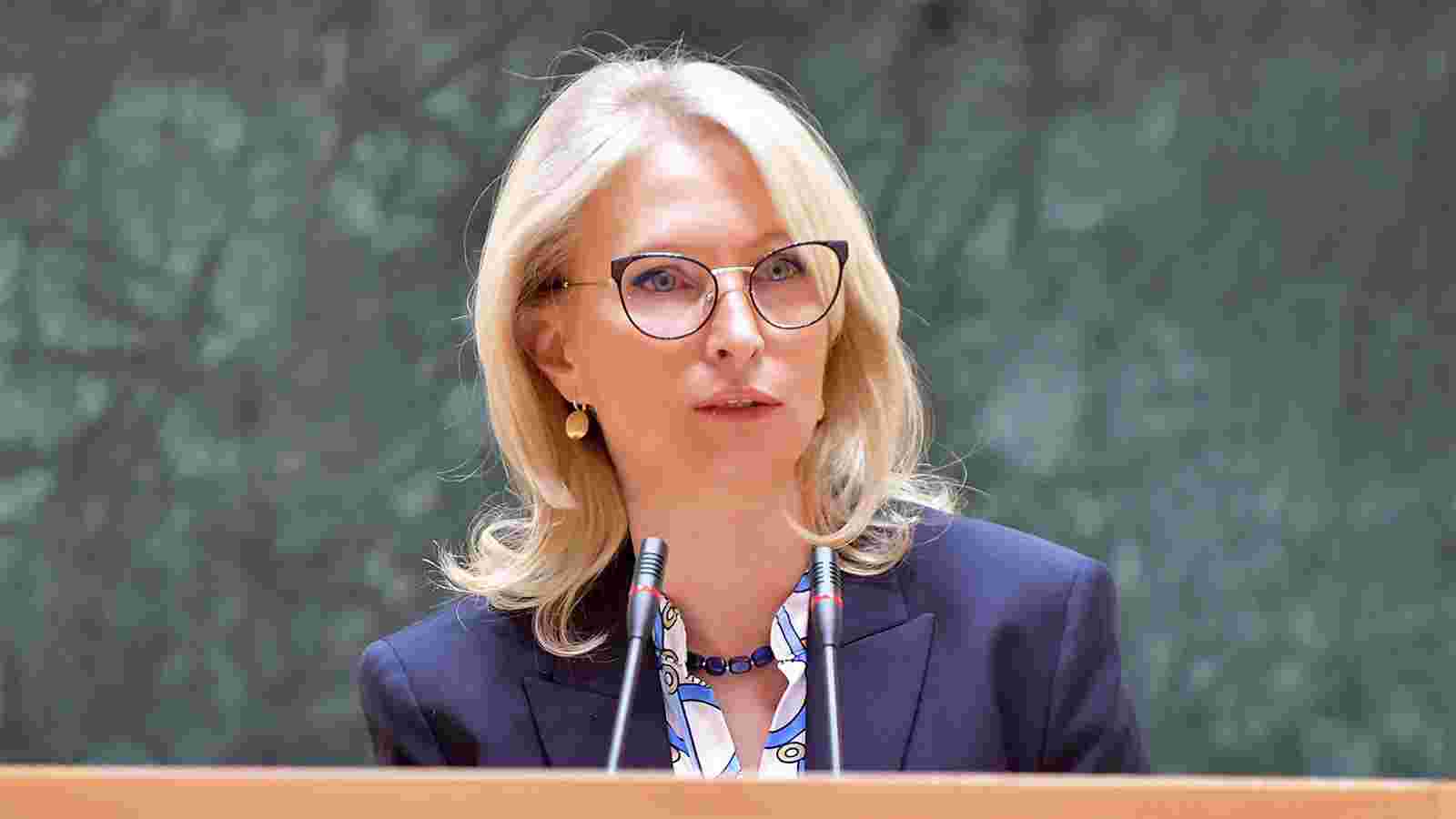
The Parliament of Georgia has approved the draft resolution titled "On the Main Directions of the Monetary and Foreign Exchange Policy for 2025-2027." The document outlines the inflation target, the key monetary policy instruments used to achieve it, the current macroeconomic environment, and potential risks. Natia Turnava, Acting Governor of the National Bank of Georgia (NBG), presented the resolution to Parliament.
During her presentation at the plenary session, Turnava emphasized that the consistent changes to the NBG's monetary policy rate, along with the effective transmission of these measures within the current monetary policy framework, have successfully ensured price stability in Georgia.
“Inflation has been on a downward trend since early 2023, remaining below the target level for the past 20 months. In November 2024, inflation was 1.3%. With declining inflation, the National Bank of Georgia began reducing the monetary policy rate gradually from May 2023, lowering it by a total of 3 percentage points to 8.0% as of November 2024. Based on the current baseline macroeconomic forecast, inflation in 2024 is projected to average 1.2% and stabilize around the target level in the medium term,” noted Turnava.
She further stated that alongside low inflation, economic activity in Georgia remains robust. Preliminary data indicate an average economic growth rate of 10% for the first 10 months of 2024. This economic expansion is increasing the overall potential of the economy, which helps neutralize price pressures from the demand side.
As Natia Turnava stated, the National Bank of Georgia also takes into account the risks associated with the baseline scenario and continues to reduce the policy rate in moderate steps. As a result, in the medium term, while mitigating inflation risks, the rate will gradually approach its neutral level of 7%.
"It is worth noting that, globally and especially in the region, the situation remains rapidly changing amid high uncertainties. Against this backdrop, it is important for monetary policy responses to be cautious and measured. Considering macroeconomic risks and the current macroeconomic forecast, the National Bank of Georgia continues the normalization of the monetary policy rate with moderate steps. In the medium term, under other equal conditions, the rate is expected to stabilize around its neutral level, currently assessed at 7%," said Natia Turnava.
Turnava also highlighted the significance of the inflation-targeting regime for a small, open economy like Georgia. “The inflation targeting regime of monetary policy is important in order for the monetary policy response to align with the economic cycles of Georgia and to minimize the economic volatility caused by business cycles as much as possible. Consequently, inflation and employment are more stable, serving as a foundation for long-term economic growth and the improvement of the population's well-being. Additionally, for the growth of productivity in the country and, as a result, for long-term economic development, the free mobility of capital is essential. These two conditions, in turn, require the existence of a floating exchange rate regime," said Natia Turnava.
The Acting Governor stressed the role of international reserves as a cornerstone of Georgia’s macroeconomic stability and emphasized the importance of their effective management. She also addressed recent foreign exchange interventions.
“In October, market expectations diverged from fundamental factors due to uncertainty, leading to individual large transactions aimed at purchasing foreign currency. To prevent these transactions from triggering mass panic and excessive exchange rate fluctuations, the NBG intervened in the foreign exchange market. Between January and October, the NBG’s net foreign exchange sales amounted to USD 588 million,” she stated.
Turnava noted that the NBG remains committed to its long-term policy of accumulating international reserves. In November, the NBG resumed reserve replenishment, with net purchases amounting to USD 124.5 million.
The report also reviewed the NBG’s larization policy and efforts to enhance monetary policy transmission and strengthen financial stability.
"As a result of the measures implemented, the level of loan larization has increased. Confidence in the Georgian lari is growing, driven by the assurance of price stability and reflected in the trends of larization within the banking sector's deposits. However, despite these positive developments, dollarization remains high and continues to pose a challenge for Georgia's economy. Accordingly, the National Bank of Georgia continuously analyzes the dynamics of dollarization and, when necessary, implements appropriate measures. These efforts not only reduce currency and related credit risks for individual borrowers but also promote long-term economic growth," stated Natia Turnava.
In conclusion, Natia Turnava stated that the proposed monetary, credit, and foreign exchange policies will ensure medium-term price stability, enhance Georgia’s resilience to potential shocks, and foster stable, long-term economic growth.