Parliament of Georgia Approves National Bank of Georgia's 2024 Annual Report
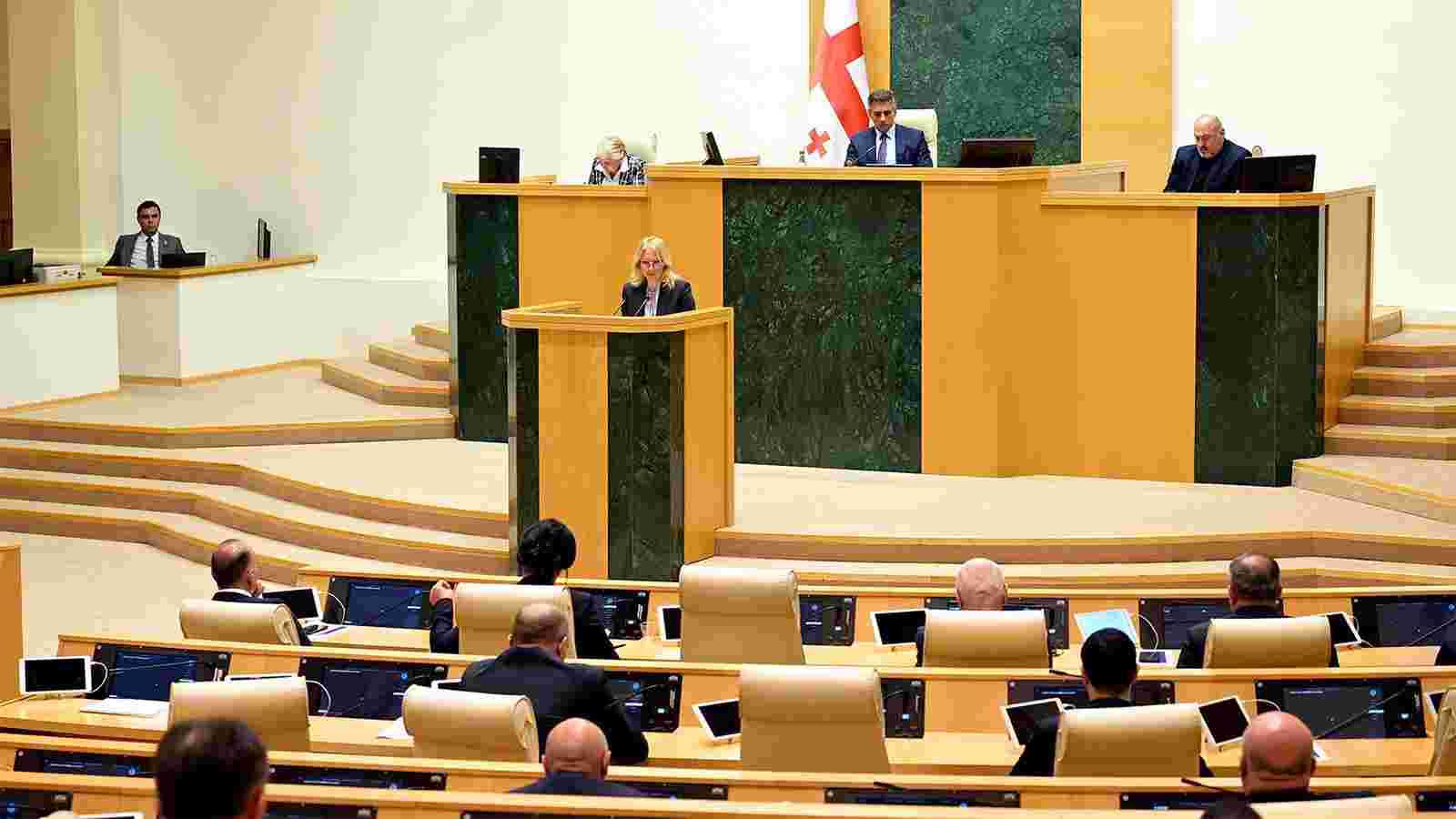
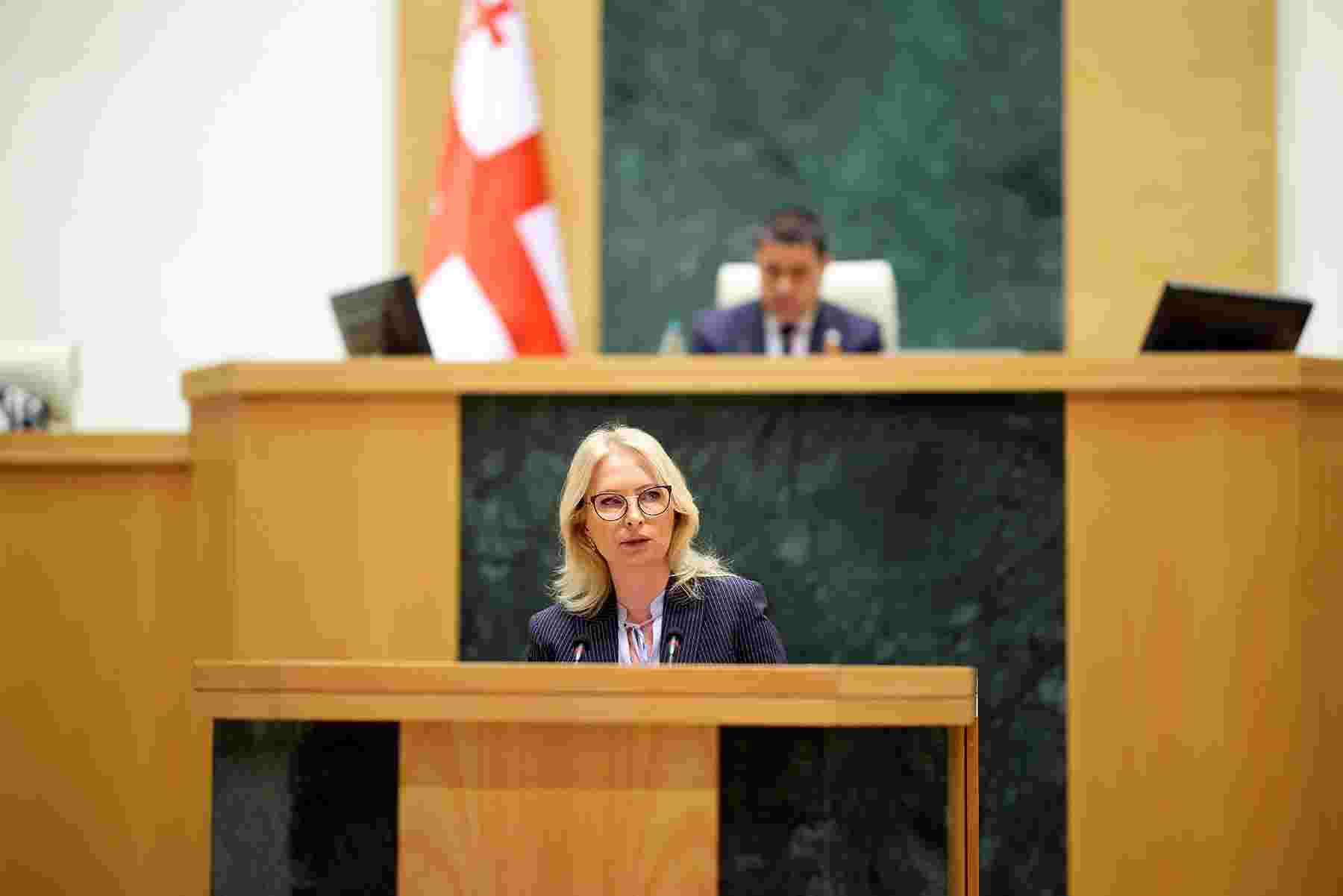
The Parliament of Georgia voted and approved the draft resolution "On the Annual Report of the National Bank of Georgia for 2024," presented by the NBG Governor Natia Turnava.
The report covers key areas such as monetary policy, foreign exchange policy, supervisory measures, and includes audited financial statements. In her address to the legislative body, Natia Turnava outlined the strategic priorities that guided the NBG throughout the reporting period.
She began by emphasizing the NBG’s primary mandate-ensuring price stability-which she described as a prerequisite for long-term economic prosperity. To achieve this, the Bank operates under an inflation-targeting framework, maintaining a target inflation rate of 3 percent since 2018.
"It is noteworthy that in 2024, inflation remained stably low, averaging 1.1 percent," said Turnava. "Core inflation, which excludes the most volatile items such as food, energy, and cigarettes, averaged 1.6 percent. This low-inflation environment was largely driven by domestic economic factors. Specifically, due to the NBG’s sound policies, long-term inflation expectations remained anchored near the target. Additionally, improvements in the economy’s productive capacity helped ease inflationary pressures from strong aggregate demand. Moreover, the effective exchange rate of the Lari remained relatively strong throughout 2024, further contributing to the low inflation."
She also highlighted the normalization of monetary policy, noting that the Bank reduced the refinancing rate by 1.5 percentage points, bringing it to 8.0 percent in the first half of the year. However, in response to rising global risks in the second half of the year, the Bank adopted a more cautious stance and kept the policy rate unchanged.
"With monetary policy normalization, credit activity accelerated, boosting aggregate demand," she stated. "It is important to note that strong demand, along with an increase in the economy's total production potential, supported high economic growth. As a result, real GDP growth reached 9.4 percent in 2024. External demand also had a modest but positive impact on economic activity."
Turnava devoted a significant part of her report to the management of international reserves, underscoring their importance in maintaining macroeconomic stability. She reaffirmed the Bank’s commitment to building up reserves and managing them effectively.
"As of December 2024, Georgia’s international foreign exchange reserves totaled 4.4 billion US dollars," she reported. "In early 2024, favorable market conditions allowed for reserve accumulation through foreign exchange interventions. In the second half of the year, although fundamental macroeconomic factors supporting the Lari remained strong, market uncertainty triggered expectations that diverged from those fundamentals, leading to excessive exchange rate volatility. The NBG responded with interventions, including providing US dollar liquidity to the market. These actions helped stabilize sentiment and curb further dollarization. As anticipated, these adverse effects on the exchange rate proved temporary, and by the end of the year, the Bank resumed reserve accumulation."
She added, "In total, net sales by the NBG amounted to 434.75 million US dollars in 2024. Given continued favorable market conditions in 2025, reserve accumulation efforts are ongoing. Purchases are actively carried out, and we publish statistics monthly. As of May 2025, Georgia’s official reserve assets stand at 4.6 billion US dollars. I can confirm that net purchases to date have fully offset last year's net sales."
During the presentation of the annual report, the Governor of the NBG highlighted the institution’s ongoing efforts to reduce structural risks stemming from the high level of financial dollarization. She noted that the measures undertaken by the NBG have led to a significant decline in dollarization.
"Specifically, loan dollarization has dropped to 43.3%, down from 55.4% in 2019, while the deposit dollarization rate has decreased to 52.2%, compared to 64% in 2019," Turnava stated. "Nevertheless, dollarization and its associated risks continue to pose a major challenge to the financial sector. To address these risks, the NBG continued implementing its long-term de-dollarization strategy throughout 2024. A key measure involved gradually introducing a cap on unhedged foreign currency loans, which was set at 500,000 Lari. As a result, approximately 90% of mortgage loans and 100% of consumer and micro-business loans are now hedged, meaning they are protected against currency fluctuations.”
"It is important to note," Turnava added, "that following the decision of the Financial Stability Committee on May 28, 2025, the threshold for unhedged foreign currency loans will be raised from 500,000 to 750,000 Lari. This adjustment will take effect on August 1, 2025."
During the plenary session, the Governor reiterated that, in addition to maintaining price stability, ensuring financial stability remains a central objective of the NBG. She provided a comprehensive overview of the institution’s macroprudential policies and financial sector supervision initiatives aimed at safeguarding the stability of Georgia’s financial system.
Following the presentation, Natia Turnava responded to questions from members of Parliament.


12 June, 2025
Photogallery
15