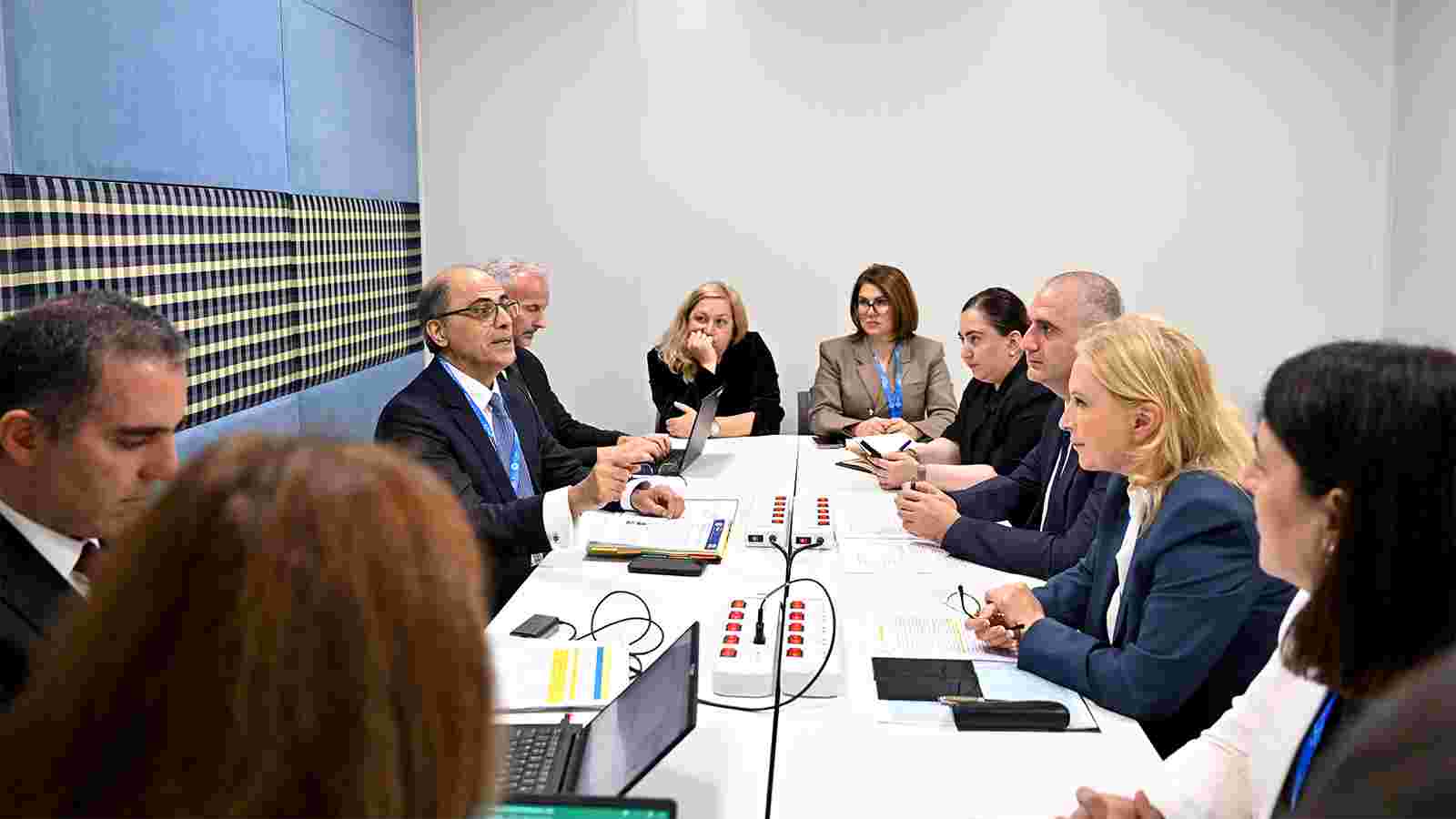
NBG Governor Meets with Jihad Azour, Director of the IMF Middle East and Central Asia Department
On the sidelines of the ongoing Annual Meetings of the International Monetary Fund (IMF) and the World Bank in Thailand, Natia Turnava, Governor of the National Bank of Georgia (NBG), and Lasha Khutsishvili, Minister of Finance of Georgia, together with their delegation, met with Jihad Azour, Director of the IMF's Middle East and Central Asia Department.
During the meeting, the parties discussed Georgia's fiscal and monetary policies, the macroeconomic situation, and issues relating to cooperation with the IMF.
It was emphasized that, against the backdrop of the regional situation and as a result of stable fiscal and monetary policies, Georgia's macroeconomic fundamentals remain strong, while the country's external position has improved significantly in recent years.
It was noted that, as of September 2026, annual inflation stood at 5.6%, core inflation at 3.5%, and services inflation at 3.7%, indicating that underlying inflationary pressures remain relatively moderate. It was emphasized that the deviation from the target rate was largely attributable to supply-side shocks, specifically the rise in energy prices resulting from geopolitical tensions in the Middle East.
"Our priority is to prevent these shocks from spreading broadly to domestic inflation through inflation expectations and second-round effects. The relatively sticky components of inflation remain below the overall inflation rate. The medium-term forecast continues to depend on risks related to the geopolitical situation and commodity prices," noted Natia Turnava.
The meeting also highlighted the NBG's policy of accumulating international foreign exchange reserves. The significant improvement in the international reserve adequacy ratio in 2026 was welcomed. The country's reserves stood at 128.7% of the adequacy level determined under the IMF's Assessing Reserve Adequacy (ARA) methodology.
It was noted that reserve accumulation had been supported by the resilience of the Georgian economy, an improvement in the external balance, and continued financial inflows. Furthermore, the policy of reserve accumulation has become an important factor in how international rating agencies assess Georgia.
The meeting was also attended by NBG Vice Governors Ekaterine Mikabadze, Ekaterine Galdava, and Nino Jeladze, as well as Ekaterine Guntsadze, Deputy Minister of Finance of Georgia.