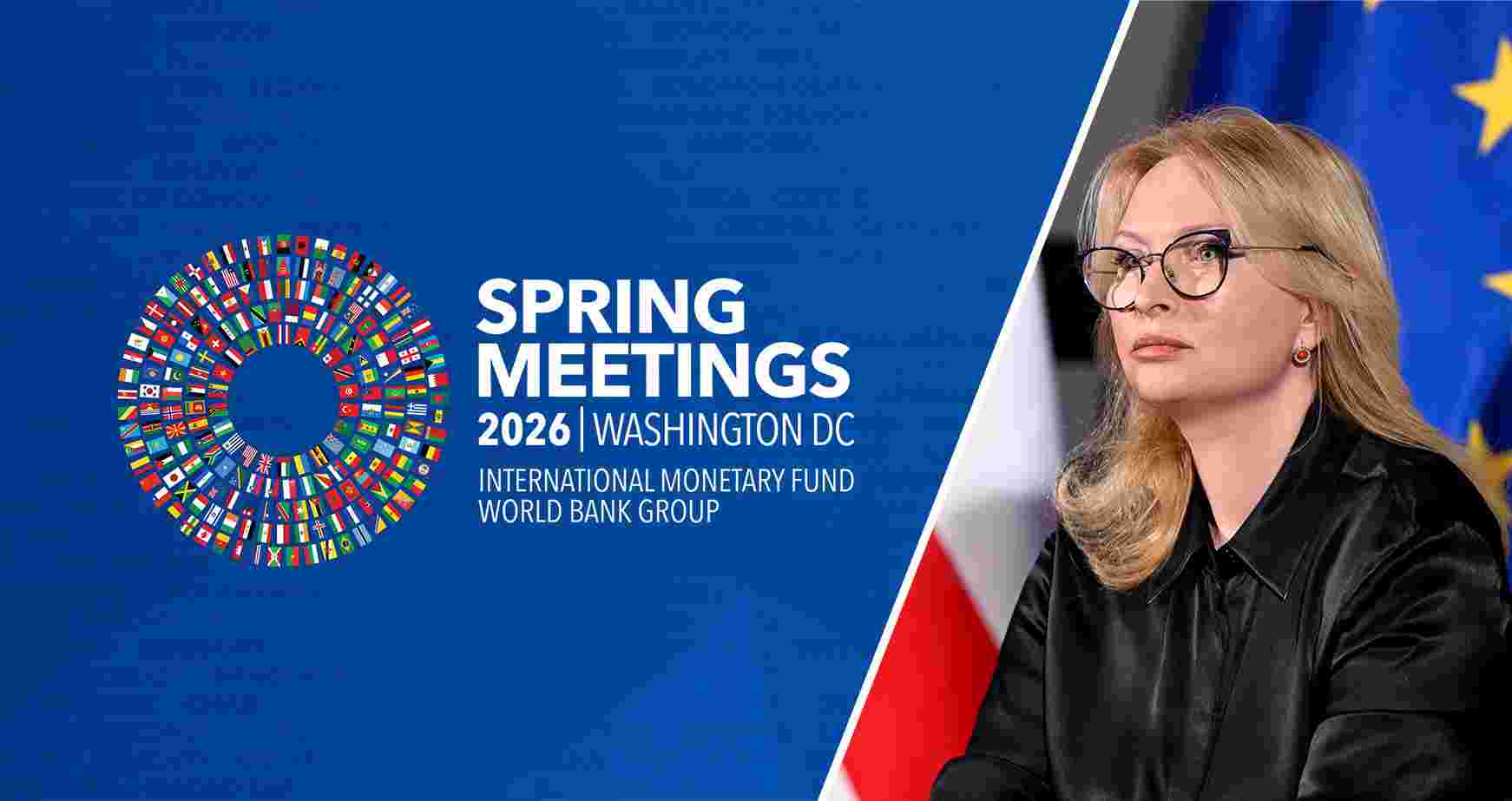
Natia Turnava to Participate in the IMF-World Bank Spring Meetings as Part of the Georgian Delegation
Natia Turnava, Governor of the National Bank of Georgia (NBG), will participate in the Spring Meetings of the International Monetary Fund (IMF) and the World Bank Group as part of the broader Georgian delegation. She will be accompanied by the Vice Governors of the NBG.
The delegation includes Minister of Finance Lasha Khutsishvili, Deputy Ministers of Finance Giorgi Kakauridze and Ekaterine Guntsadze, as well as NBG Vice Governors Ekaterine Mikabadze, Ekaterine Galdava, and Nino Jeladze.
During the week-long visit, Governor Turnava will hold high-level discussions with senior IMF officials, including Bo Li, Deputy Managing Director of the IMF; Jihad Azour, Director of the Middle East and Central Asia Department; as well as Jeroen Clicq and Marnix van Rij, Executive Directors representing the IMF’s Dutch-Belgian Constituency.
In addition, the Governor of the NBG and the Minister of Finance will meet with leading international investors from major U.S. financial institutions, including J.P. Morgan and Bank of America, to highlight Georgia’s investment potential.
As part of the official program, Governor Turnava will participate in the Central Bank Governors’ Roundtable, where this year’s discussion will focus on the role of central banks in the post-modern era.
The visit will also include a bilateral meeting between Governor Turnava and the Governor of the Central Bank of the United Arab Emirates, aimed at exploring opportunities for enhanced cooperation between the two institutions.
In parallel, NBG Vice Governors will hold a series of high-level bilateral meetings within the broader framework of the Spring Meetings.
The Spring Meetings annually bring together the Boards of Governors and Alternate Governors of the IMF and the World Bank, along with central bank governors, finance ministers, private sector leaders, and other key stakeholders from across the globe. Participants will deliberate on major global economic challenges, including the economic outlook, poverty reduction, economic development, financial stability, as well as emerging priorities such as cybersecurity and financial technology (FinTech).