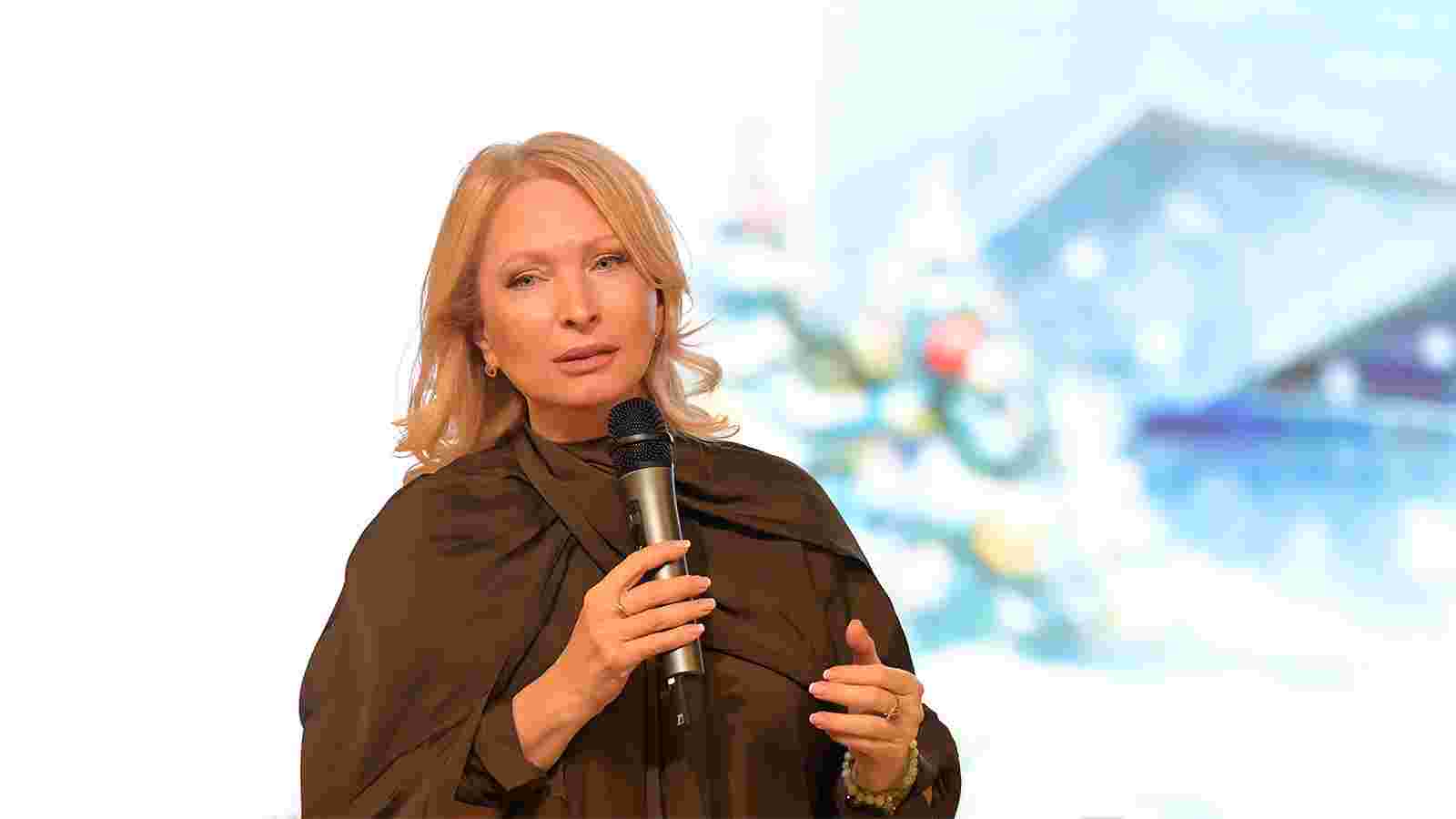
Natia Turnava, Governor of the National Bank of Georgia, Summarizes 2025
Another productive and successful year has come to a close, marked by significant achievements both for the country and for the National Bank of Georgia (NBG).
Looking back, it can be stated without exaggeration that, under the existing monetary policy framework, the Bank’s consistent steps toward policy tightening and subsequent normalization ensured substantial price stability and, in line with our forecasts, a trend toward inflation normalization by year-end.
Given the significant increase in uncertainty in recent years and the high risks of deviations from forecasts, the NBG introduced a new scenario-based approach to monetary policy communication at the start of 2025. This approach made the decision-making process more transparent and linked risk management to a systematic analysis of potential macroeconomic scenarios. As a result, the NBG’s potential actions became more predictable, further strengthening market confidence in the institution.
International reserves remain a key factor in investor confidence in a country’s macroeconomic stability. Accordingly, the NBG’s foreign exchange policy focuses on the accumulation and efficient management of reserves. Taking advantage of favorable conditions in the foreign exchange market, the NBG has actively replenished reserves since the beginning of 2025. For the first time in Georgia’s history, the volume of international reserves is expected to exceed USD 6 billion. It is also noteworthy that the influential rating agency Fitch Ratings maintained Georgia’s sovereign rating at ‘BB’ and upgraded the outlook to Stable, citing the growth of international reserves as a key factor behind this improvement.
Throughout the year, the NBG continued its efforts to promote larization, with tangible results: 58.2% of the total loan portfolio is now denominated in lari, and 77.1% of loans to individuals are in the national currency. By maintaining price stability, confidence in the lari continues to strengthen, as reflected in the de-dollarization trend of banking sector deposits, with 52.1% now denominated in lari. The stability of the foreign exchange market also played an important role throughout 2025.
The year was also marked by global uncertainty. In a rapidly changing international environment, it was essential to adopt policies that mitigated significant economic losses while effectively safeguarding the stable, long-term development of Georgia’s economy and financial sector.
As a result of the policies implemented in 2025, the banking sector remains resilient, with high capitalization, strong asset quality, and sound lending practices.
It is also worth noting recent legislative changes aimed at strengthening the protection of financial sector consumers across several areas. These include an increase in the value threshold of disputes considered by the Dispute Resolution Commission at the NBG. In addition, to further enhance consumer protection and ensure the secure functioning of the virtual assets market, virtual service providers will now be subject to full supervision by the NBG. To promote competition and improve efficiency in the payments market, the NBG is opening settlement accounts for payment service providers. Simultaneously, non-bank institutions participating in open banking are being given greater opportunities to compete with commercial banks, introduce innovative payment services, and offer consumers faster, simpler, and more accessible solutions.
It is also important to highlight that, as a result of disputes reviewed and resolved by the Dispute Resolution Commission during the year, consumers were compensated in 55 cases, totaling GEL 400,000.
In 2025, we took active steps to develop the securities market and enhance its transparency. Supervisory and regulatory measures were implemented to ensure market stability, strengthen investor confidence, and support the sustainable development of the financial system. The year saw significant activity in the issuance of corporate bonds, with the volume of publicly issued bonds exceeding GEL 1.5 billion. In addition, the investment funds market experienced notable growth and development.
The year was also notable for international cooperation. The NBG engaged actively with international organizations and central banks of other countries, participating in various regional projects and initiating work on bilateral agreements with several European Union nations. During the year, the NBG collaborated closely with both the Society for Worldwide Interbank Financial Telecommunication (SWIFT) and China’s Cross-Border Interbank Payment System (CIPS), laying the groundwork for greater regional diversification of payments.
This year marked the 30th anniversary of the introduction of Georgia’s national currency, the lari. Despite three decades of challenges, the lari has successfully fulfilled its primary role as a reliable and stable currency, both in economic transactions and in the daily lives of citizens. It stands as a symbol of freedom, unity, and national identity for all of us. The anniversary was celebrated with numerous events and activities organized by the NBG, including a large-scale international forum attended by over 300 guests from nearly 30 countries worldwide.
In addition, this year the NBG hosted a high-level international event for the first time. The Tbilisi Financial Summit, held within the framework of the Silk Road Forum, brought together central bankers from across the region, international investors, representatives of financial institutions, and leaders of the fintech industry. The Summit reaffirmed Georgia’s crucial role in strengthening connectivity between Europe and Asia and demonstrated that all the necessary prerequisites are in place for the country to emerge as a strong finance hub.
This year, the NBG also successfully transitioned to the SWIFT ISO 20022 global standard, ensuring the full integration of the Georgian banking system into international financial flows. This transition will further encourage innovation and enhance the competitiveness of the country’s payment infrastructure at both regional and global levels.
By the end of the year, Georgia’s position in the Anti-Money Laundering Index had improved by 27 places, placing the country among the world’s top 40. By this measure, Georgia ranks among the top twenty NATO and EU member and candidate countries. This improvement reflects the positive impact of the measures implemented by the NBG.
A number of projects and initiatives also deserve particular attention. Among them are the upgrade of the real-time gross settlement system (RTGS) and the introduction of an instant payment system (IPS). These projects have now entered a new phase, with their launch planned for 2026.
On the occasion of the festive season, I extend my best wishes for a joyful Christmas and a prosperous New Year. May 2026 bring continued well-being, progress, and success to each of you, your families, and to Georgia as a whole.
Sincerely,
Natia Turnava