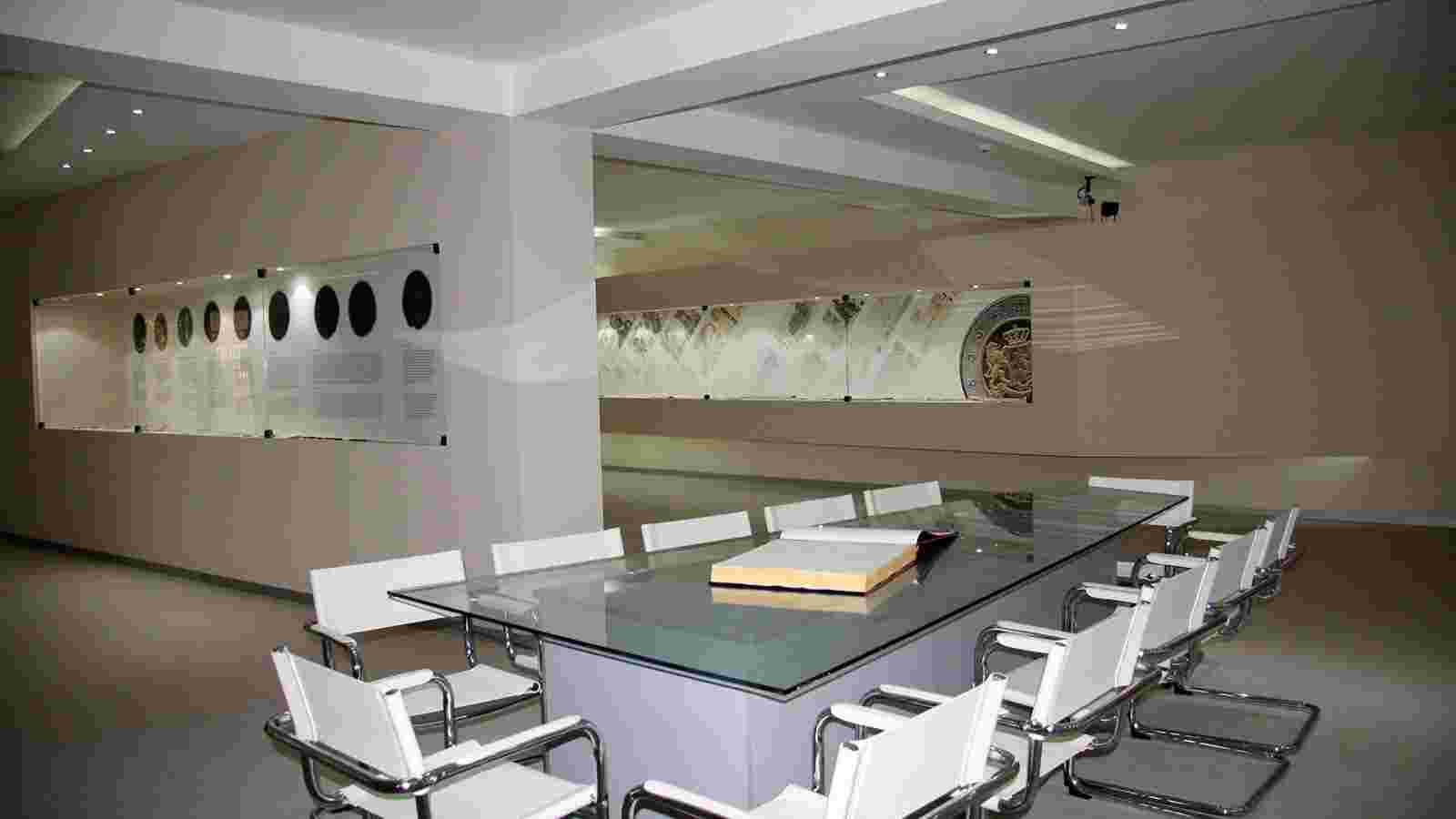
Exhibition of Private and Corporate Currency Notes from the Period of the Democratic Republic of Georgia Opened at the NBG Money Museum on International Museum Day
On the occasion of International Museum Day and within the framework of the Week of Restored Independence, an exhibition titled “Private and Corporate Currency Notes from the Period of the Democratic Republic of Georgia” opened today at the Money Museum of the National Bank of Georgia.
The exhibition presents corporate currency notes and payment instruments issued by various private organizations during the period of the Democratic Republic of Georgia (1918–1921), offering visitors an opportunity to explore an important part of the country’s monetary history.
The Money Museum is distinguished by its collection of monetary artifacts minted and circulated in Georgia over the course of twenty-six centuries. The exhibition includes Colchian tetri, coins minted by Georgian kings and rulers, as well as Byzantine, Arab, Persian, Ottoman, European and other foreign currency specimens. A special section of the museum’s permanent exposition is dedicated to Georgian bons issued during the period of the independent Democratic Republic of Georgia, along with the history of the creation and circulation of the Georgian national currency the lari. Visitors can also view lari sketches, samples and printing materials.
The museum offers guests an opportunity to discover the 26-century history of Georgian money from the Colchian tetri to the modern lari as well as commemorative coins issued by the National Bank of Georgia.
The National Bank of Georgia reminds visitors that the Money Museum was established in Tbilisi in 2001 and relocated to Kvareli in 2012, the birthplace of Ilia Chavchavadze, founder of the Georgian banking sector.
The exhibition will continue through 31 May.