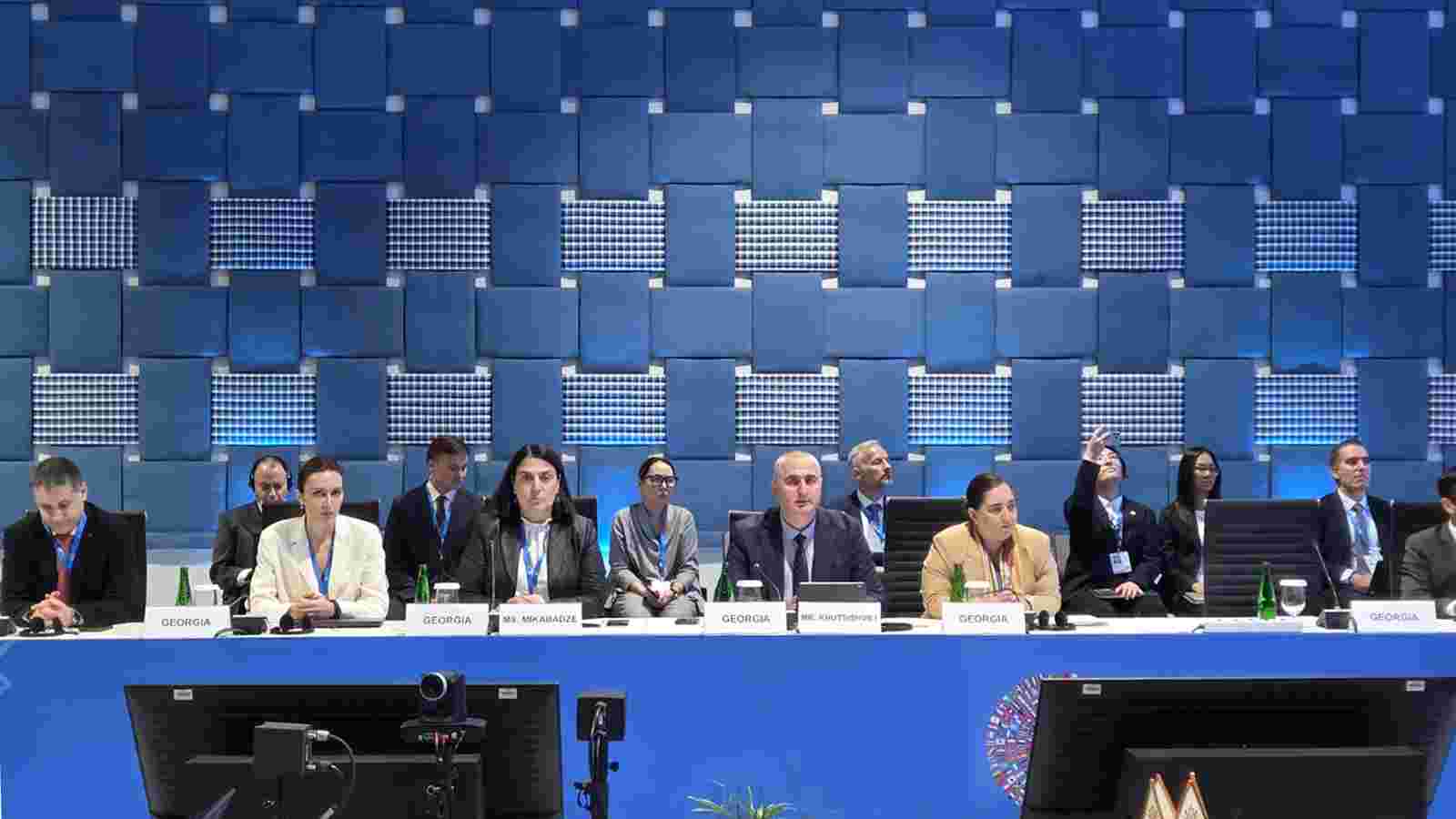
Ekaterine Mikabadze Participates in the Caucasus and Central Asia Roundtable at the IMF and World Bank Annual Meetings
Ekaterine Mikabadze, First Vice Governor of the National Bank of Georgia (NBG), participated in the Caucasus and Central Asia (CCA) Roundtable held in Thailand as part of the Annual Meetings of the International Monetary Fund (IMF) and the World Bank.
During the discussion, participants addressed the impact of global developments on regional economies, as well as the related challenges and emerging opportunities. Particular attention was paid to the effects of geopolitical tensions and disruptions in energy markets and the air transport sector on inflation, economic activity, and the external sector.
Discussing Georgia’s experience, Ekaterine Mikabadze noted that the impact of recent global shocks on the country has been felt primarily through the inflation channel. She emphasized that the National Bank’s main objective remains keeping inflation expectations stable and assessing the extent to which initial effects could feed through to core and services inflation.
“In response to these challenges, the National Bank of Georgia maintains a tight monetary policy stance and closely monitors the impact of global shocks on inflationary processes. Future monetary policy decisions will be based on an assessment of inflation dynamics and their potential impact on inflation expectations,” stated Ekaterine Mikabadze.
Regarding the strengthening of Georgia’s external position, the discussion focused on reducing the current account deficit and increasing international reserves. Ekaterine Mikabadze emphasized that, in September 2026, Georgia’s international reserves reached a record high of approximately USD 8.1 billion, strengthening the country’s external buffers and reducing its vulnerability to external shocks.
The First Vice Governor of the NBG also highlighted the resilience of the Georgian economy, noting that structural changes implemented in recent years, the expansion of production capacity, and the development of export-oriented, high-productivity sectors have strengthened the resilience of the Georgian economy. In addition, the diversification of services exports across sectors and geographical markets contributes to mitigating the impact of global shocks.
“The discussions at the Caucasus and Central Asia Roundtable, held as part of the IMF and World Bank Annual Meetings, once again underscored the importance of economic diversification, maintaining macroeconomic stability, and having strong external buffers amid global uncertainty,” stated Ekaterine Mikabadze.